
Alopecia: Types and Hair Transplant Considerations
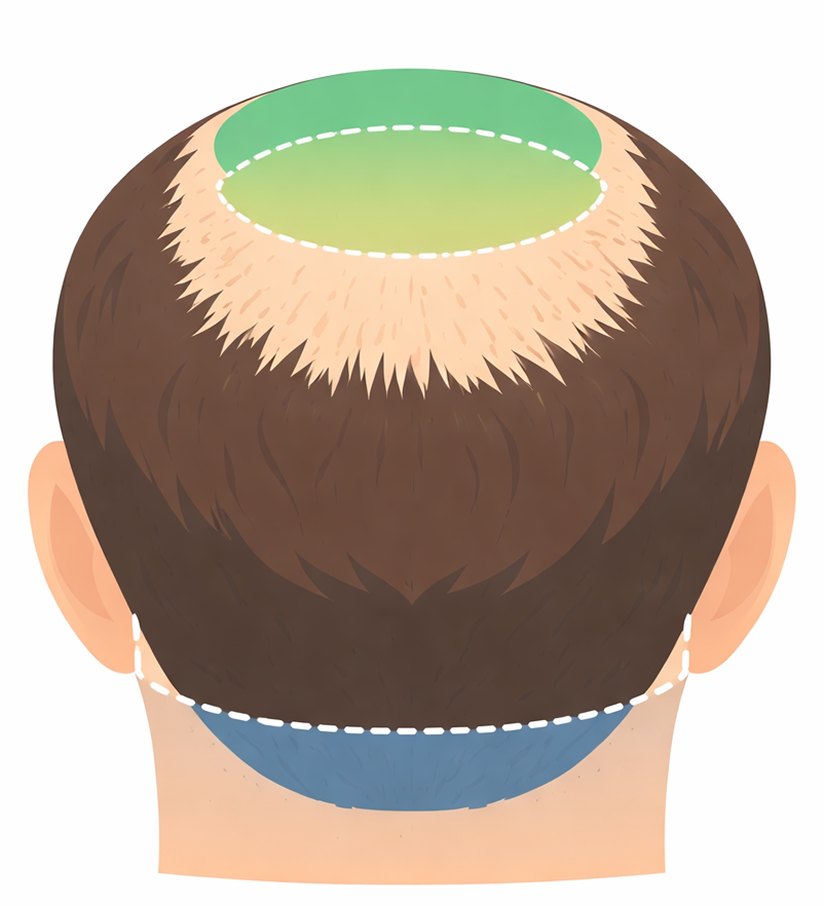
Alopecia is a broad term describing hair loss, and understanding the underlying cause is critical before considering surgical treatment. The most common type is androgenetic alopecia which is male and female pattern hair loss, a genetically driven, progressive condition influenced by DHT sensitivity. This form of alopecia is typically the best candidate for hair transplantation because the donor area in back and sides of the scalp is genetically resistant to DHT. With proper medical stabilization through PRP or topical and oral medications like finasteride or minoxidil, transplantation can provide long-term natural results.
Other types of alopecia require more caution. Alopecia areata is an autoimmune condition that causes patchy hair loss and may be unpredictable; transplantation is generally not recommended unless the disease has been inactive for a prolonged period. Traction alopecia, caused by chronic tension from hairstyles, can often be treated successfully with transplantation once the damaging behavior has stopped. Cicatricial (scarring) alopecias, such as lichen planopilaris or frontal fibrosing alopecia, involve inflammatory destruction of hair follicles and require medical management to achieve stability before surgical consideration. In all cases, a thorough medical evaluation with Mollura Medical Hair Restoration is essential to determine candidacy. Hair transplantation is most effective when the underlying alopecia is stable, well-diagnosed, and appropriately managed.
Every result here is one of Dr. Mollura’s own cases.
Graft counts, technique and classification exactly as recorded in the chart. Two patients agreed to tell it on camera.
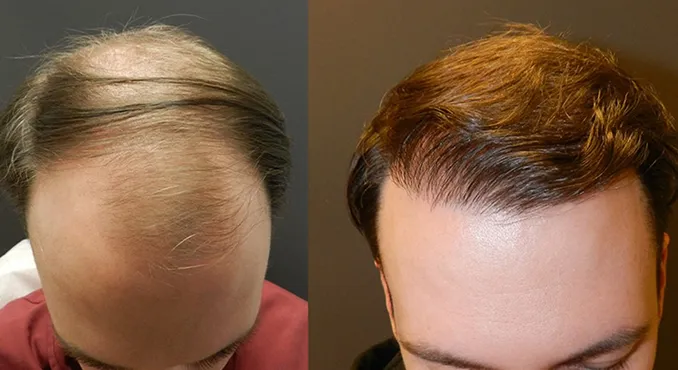 Before / After
Minimal vellus hair across the top of the scalp at 25.
See the full case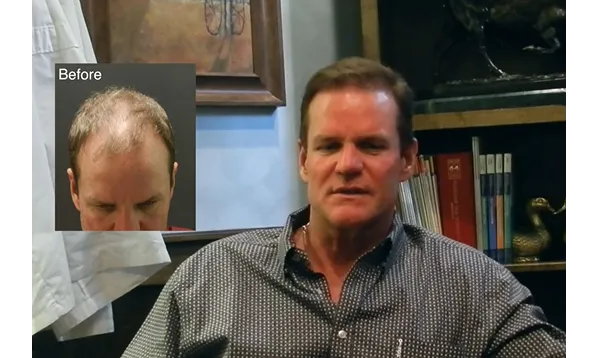 Patient video
He asked to tell it on camera. Two minutes, his own words.
Watch his story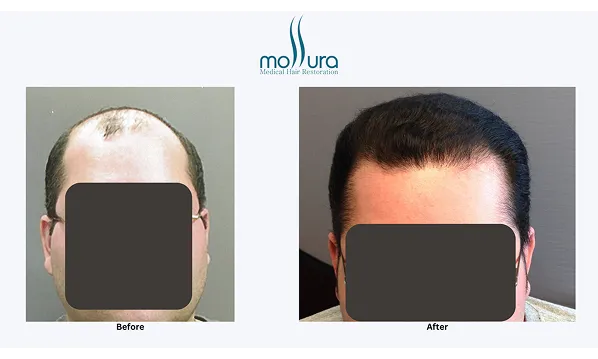 Before / After
Hairline back through the crown in one sitting.
See the full case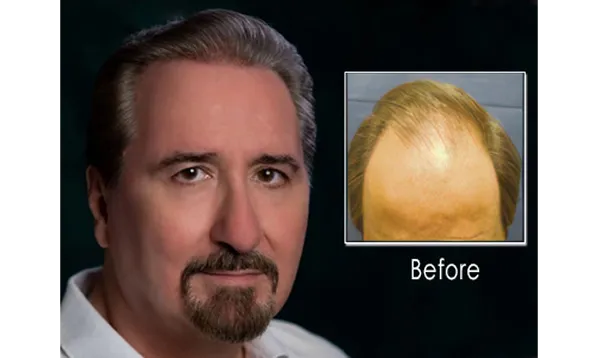 Patient video
First procedure 2009, second in 2022. Same surgeon both times.
Watch his story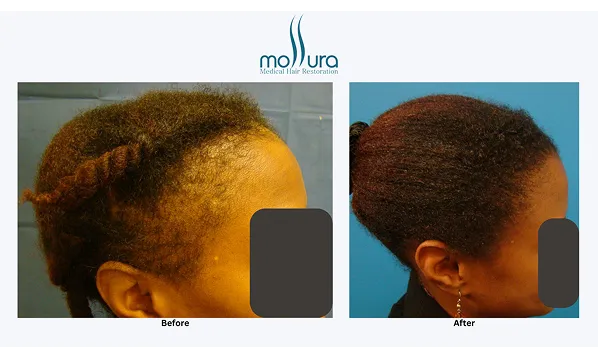 Before / After
Temporal zones and hairline rebuilt. Photographed at nine months.
See the full case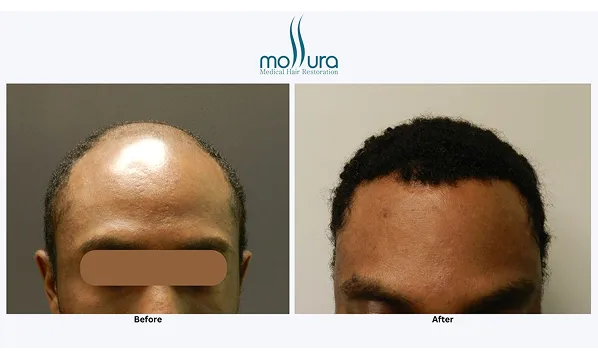 Before / After
Front half first, five years before the second pass.
See the full case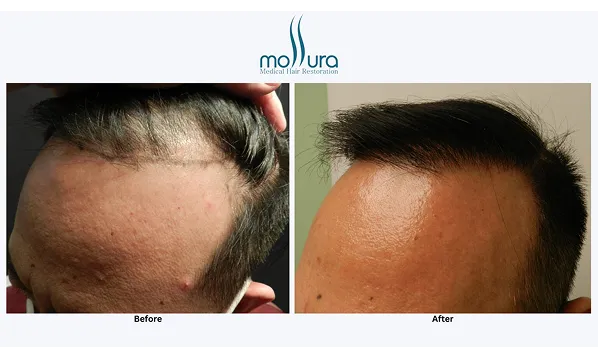 Before / After
Fifteen months between the two procedures.
See the full case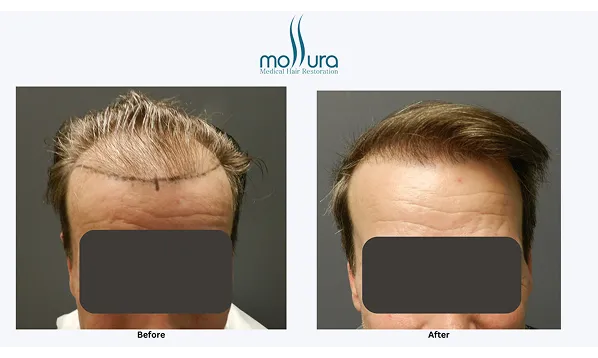 Before / After
After photograph taken fifteen months post-procedure.
See the full case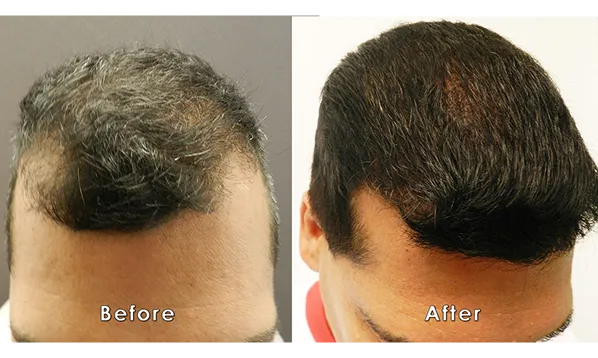 Before / After
Temporal zones only. Finasteride prescribed at consultation.
See the full case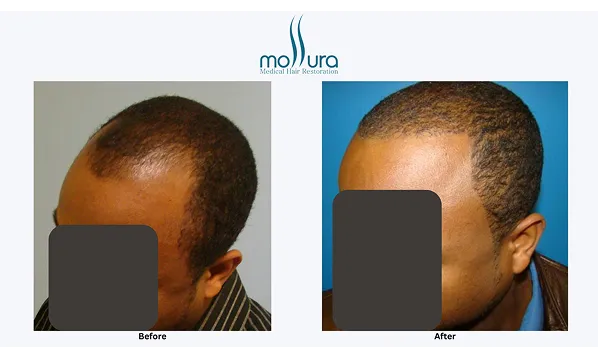 Before / After
FUE chosen so he could keep wearing his hair short.
See the full caseIn their words
4.8 across 33 Google reviews · a different 14 of 23, quoted verbatim, every visit“Dr. Molora and his team did an excellent job on my procedure. I am extremely happy with the results and would highly recommend him to others.”
“All of my questions and concerns were answered. I am very pleased with my FUE and the results so far.”
“I have had multiple procedures done with Dr. Mollura. He is a classically trained painter from Rome.”
“Dr. Mollura is an artist as much as he is a doctor. I visited multiple hair restoration facilities, and I am so grateful I found Dr. Mollura.”
“He made me feel very comfortable on every visit to his office. I’m very impressed with his surgical skills, compassion, caring and professionalism.”
“I met Dr. Mollura 14 years ago. After researching many doctors, I determined that Dr. Mollura was the best.”
“Its rare to find someone who balances skill, kindness and attentiveness so seamlessly, and thats what makes Dr. Mollura stand out.”
“During consultation, he gave me a direct, honest and easy to understand breakdown of my hair issues and treatment options.”
“What truly impressed us was the precision with which the hair follicles were placed to ensure they grow in a natural direction.”
“Within a few months there was a noticeable difference. One year later looking at pictures he has a full head of hair.”
“With the help of Dr. Mollura I’ve successfully managed hair loss for years and he’s been nothing but honest and helpful.”
“tells you everything you need to know in what procedure you’re doing & will explain what u can expect. I have gain great results”
“I just had a hair transplant procedure with Dr. Mollura and I honesty cant say enough about him, his staff and his magical hands.”
“At 9 months following the procedure, I have results that have exceeded my expectations and can expect some additional improvement.”
Photographs are of actual patients of Mollura Medical Hair Restoration, published with consent. Individual results vary and are not guaranteed. A consultation with Dr. Mollura is required to determine whether a procedure is appropriate.